Environment
Responsible energy with a lower environmental impact
At the core of our activities is a balance between the needs of societal development and environmental protection.
We produce energy in a way that reduces impacts on the climate, nature and the surrounding living environment. In our operations, we follow sustainability principles, applicable regulations, and European Union and internationally recognised standards.
Our goal is to move step by step towards more efficient resource use, lower emissions and a cleaner industry.

Informed choices to reduce climate impact
Mitigating climate change is an integral part of our environmental approach. We develop and upgrade our production in ways that help reduce greenhouse gas emissions and support the transition to more sustainable energy generation.
We monitor greenhouse gas emissions across the Group, with data verified by an independent third party to ensure transparency and reliability.
Our long-term goal is to achieve a clean industry by 2050, with no direct greenhouse gas emissions from our production processes.

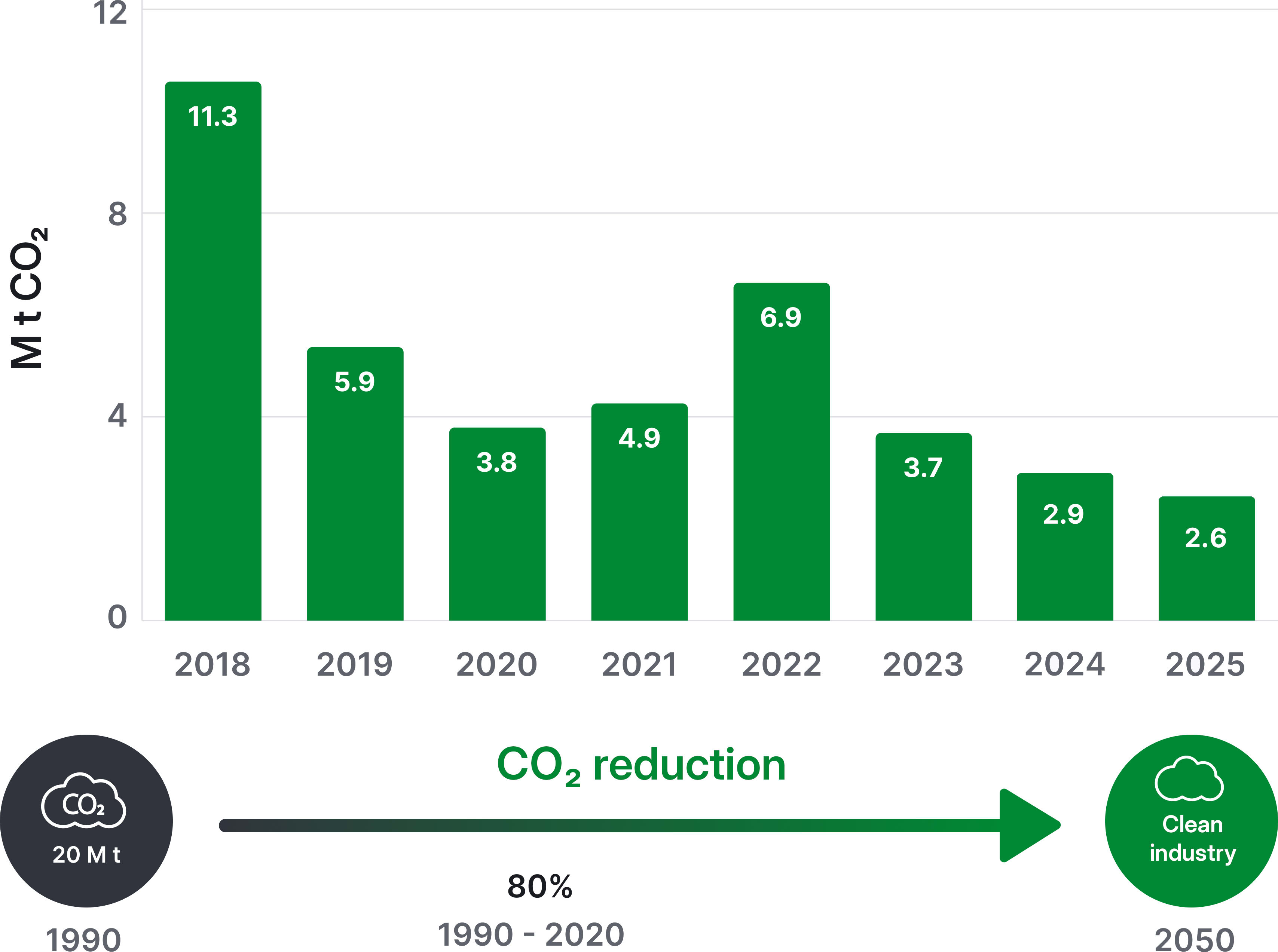
CO₂ net zero emissions from 2018 to 2050
The group’s CO₂ emissions have decreased more than fourfold in recent years, from 11.3 million tonnes in 2018 to 2.6 million tonnes in 2025.
Keeping environmental emissions under control
We manage emissions based on clear requirements, reliable data and regular monitoring. It is important for us that environmental impacts are measurable, traceable and understandable to the public.
Emissions to air and to water from our operations remain within the annual limits set in our environmental permits. Environmental permits issued to our production units and annual reports are available in the Environmental Board’s information system KOTKAS.
Reducing emissions is not only about compliance, but also about continuous improvement. We continuously seek opportunities to implement more efficient technologies and lower-impact solutions to reduce impacts on the climate as well as air and water quality.

Efficient use of resources and circular economy
We consider it important to use natural resources as efficiently and responsibly as possible. Efficient resource use helps reduce environmental impact, save materials and support more sustainable management across the value chain.
Circular economy principles are an important part of our responsible business practices. We aim to use resources efficiently, reduce waste generation and maximise the reuse of by-products and materials.
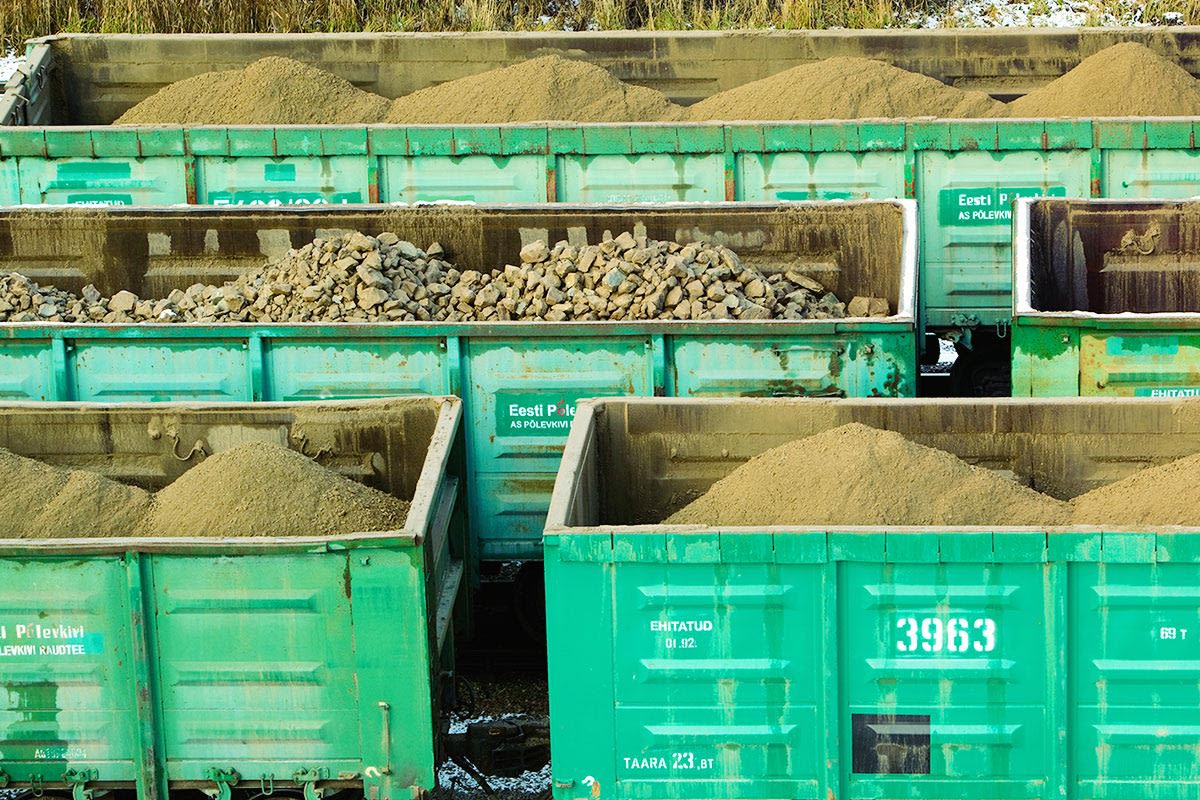
Oil shale mining results in waste rock and energy production from oil shale generates oil shale ash. Both are reused as secondary raw materials. Mixed municipal and other waste that cannot be otherwise reused is used as fuel in energy production, helping to reduce landfilling.
For us, circular economy means a practical and systematic approach to reducing environmental impact and using existing resources more wisely.
Supporting biodiversity
Preserving biodiversity is an important part of our activities. We develop and build production capacities in a way that considers the characteristics of the natural environment and helps reduce impacts on surrounding ecosystems.
When developing solar and wind parks and other production facilities, we assess environmental impacts/risks and monitor the effects of wind farms on birds and wildlife. This helps us better understand impacts and apply mitigation measures where needed.
In the construction and upgrading of production and infrastructure assets, we follow nature conservation principles and, where possible, choose solutions that reduce impacts on ecosystems, maintain natural balance and consider regional characteristics from the early planning stages.
We also restore mining and industrial areas after operations have ceased, supporting the development of new habitats or the recovery of natural environments.

A systematic approach and responsible decision-making
Environmental management is an integral part of our daily operations. We follow sustainability principles, applicable regulations and the conditions set out in environmental permits issued to our production units.
To prevent, manage and reduce environmental impacts, we implement an environmental management system in line with ISO 14001 and the Eco-Management and Audit Scheme (EMAS). In office, we follow green office principles to support a healthy workplace and reduce the environmental impact of office activities.
We value transparency and stakeholder engagement. Regular environmental monitoring, compliance assessments and public reporting help ensure that our environmental management is reliable, effective and continuously improving.

Environmental topics are also covered in the sustainability section of the Group’s audited annual report, which is available on the page for investors.
Read the Group’s Environmental Policy here.
Cooperation with research institutions
In environmental matters, we rely on a science-based approach. To achieve our goals, we collaborate with both Estonian and international research institutions and experts to develop environmentally responsible and future-oriented solutions.
Cooperation with scientists and experts helps us better assess the impacts of our activities, anticipate risks and make informed decisions when developing and upgrading production assets. This is important for reducing climate impact, using natural resources efficiently and preserving biodiversity.
